Over the past twenty years or so, social networks have become an increasingly important part of our society. What began as a way of keeping in touch with friends and family has become a tool for communicating and amplifying messages of all kinds.
I remember always being a little wary of smartphones and social networks. Having always enjoyed using an iPod Nano or a flip phone, it wasn't until 2015 that I joined Facebook, mainly to keep in touch with people I met while traveling, but gradually I became seduced by the possibility of following my passions - cinema, video games, biology, photography... Facebook was becoming an infinite source of information.
But in the midst of this spiral, I've recently realized that it comes at a significant psychological cost. Today, many people feel disconnected from their inner selves, and I too have decided to drastically reduce my consumption of social networks. Here are the reasons behind my decision.
The overwhelming world of social media
It all started when I wanted to expose myself to the digital world more professionally, to develop my expertise in social network management, demonstrate my photography and communication skills. It seemed logical, but I soon discovered that there was a lot of pressure imposed by digital platforms, through algorithms, to keep sharing. That's when things really clicked for me, because this way of doing things goes against my deepest values: preserving intimacy, prioritizing quality.
Sharing should not be an obligation dictated by an algorithm, but an authentic gesture. I want to be able to publish what I like, when it feels right, and in the way that feels right to me. With content still under construction and little experience, I couldn't see how I could stand out in the face of increasingly fierce competition. So, even before I started, I realized that this wasn't the path I wanted to follow. Having planned a travel blog-and its associated accounts-as well as an Instagram account to share my photos, I made the decision to scrap everything. Rather than lose myself in a constant battle for visibility, I preferred to refocus my energy on a more personal and authentic space.
The user versus the algorithm
gorithms, too, are a huge source of stress and anxiety. They're designed to retain Another reason I've reduced my use of social networks is the fact that everything is now controlled to make us see what the “system” thinks we want to see. These algorithms are a huge source of stress and anxiety. They are designed to hold our attention and manipulate our behavior by stimulating our dopamine. The pursuit of other people's approval, the likes, the comments, the endless scrolling... It's all designed to make us stay. And it works!
We find ourselves trapped in a spiral where it becomes difficult to disconnect. By constantly exposing ourselves to idealized images of other people's lives, we end up feeling out of step with our own reality, amplifying social comparisons and FOMO. We're led to believe that this allows us to discover new things, but in reality, these algorithms lock us into a bubble of homogeneous content-in echo chambers. Unlike magazines and books, which expose us to varied and unexpected subjects, social networks constantly show us similar content, limiting the development of our critical faculties and our openness to discovery.
Not to mention the constant misinformation or AI-generated content, amplified by these same algorithms that prioritize engagement over the veracity of information. This phenomenon contributes to the spread of fake news, making it increasingly difficult to distinguish between reality and manipulation. Exposure to biased and sometimes misleading content makes it difficult to have a nuanced view of the world around us.
The paradox of connection
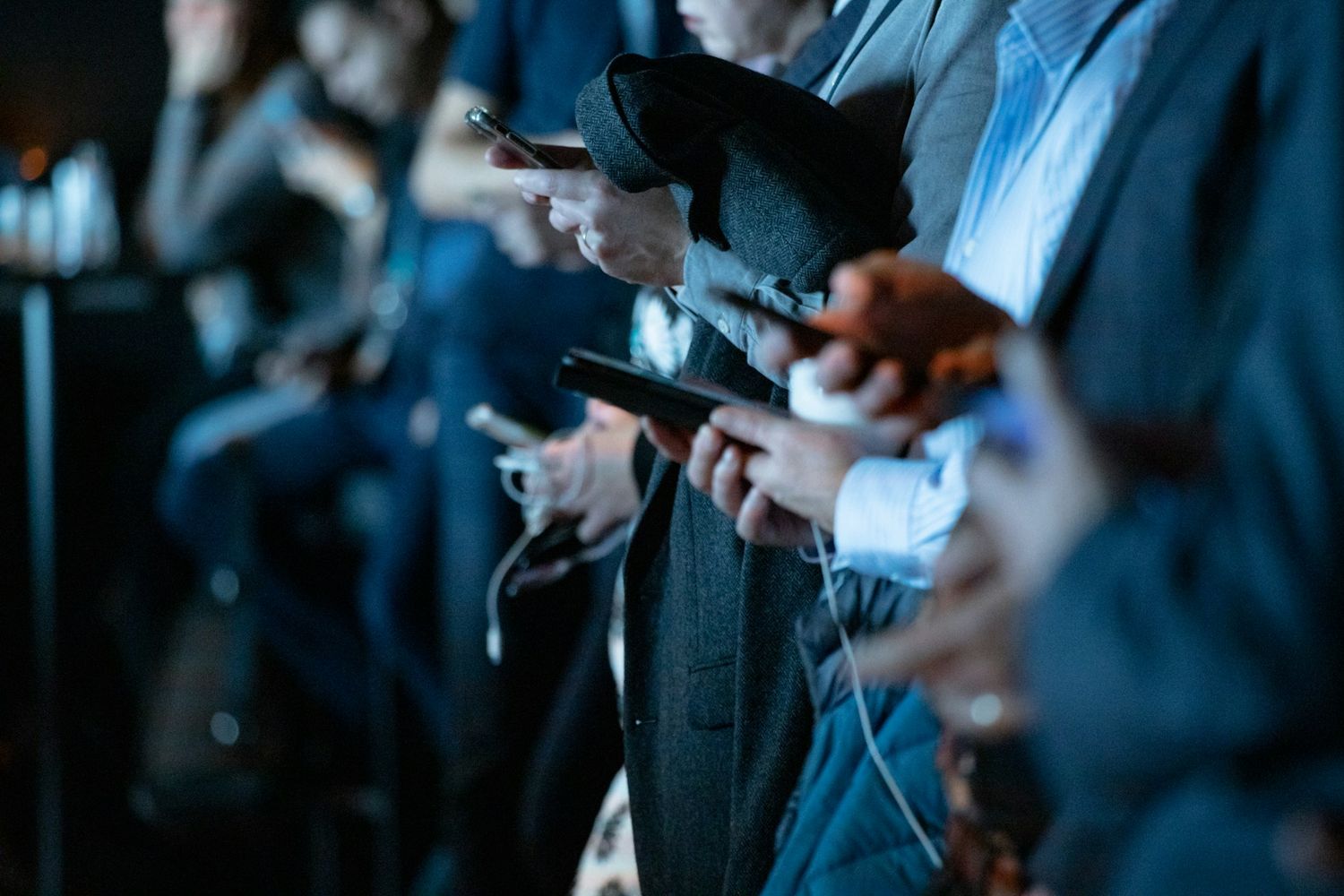
Having explored the impact of algorithms, it's essential to focus on the fact that social networks are social in name only. In an increasingly isolated society, we're led to believe that we're all connected to each other, but this remains an illusion of proximity, since nobody really knows each other. You can have hundreds of friends online, but how many would really be at your side in a time of need?
Recent studies have highlighted the fact that our hyper-connected generation is also the one that suffers most from loneliness. This happens as early as childhood. We used to have fun outside, playing ball, practicing sports for fun, but today, screens capture all our attention, distancing people from real interactions.
"Social networks are social in name only."
Plus, I wondered, why do we always need to know what everyone else is doing all the time? Why not keep a few mysteries in life?
Before social networks, we got our information from magazines, documentaries and newspapers. There was a healthy distance, a slower pace. We didn't share our opinions with hundreds of strangers. We discussed them around a table, with family or friends. I miss that authenticity, and it's hard to get back. In the end, we're more connected than ever, but paradoxically, lonelier too.
Giving value back to quality rather than quantity
When I thought about creating this website, I realized all the possibilities that were open to me. This journal, or blog, offers me a space to create with intention, at my own pace. I've rediscovered the pleasure of writing, of stopping and thinking. It has reconnected me with my creativity. This blog attracts a different audience. The people who read it are there because they're really interested. Not because an algorithm served them my content between two ads. That changes everything.
I see the same evolution in my photography. Before, I thought I had to show everything, all the time. Now, I prefer to choose my images carefully and present them in a personal portfolio. A quiet place, just like me. Maybe one picture a month. And that's fine.
Working in digital communications... without getting lost
For a long time, I thought that to work in digital, you had to be present everywhere. Instagram, Twitter (X now), TikTok... As if it were all part of the “package”. However, this makes the whole thing superficial.
Stepping back, I realized that I perform much better when I share content that resonates with my values and aspirations. Finding meaning in what I publish is far more motivating than chasing popularity or creating just to please others. What really drives me is the opportunity to express something authentic, meaningful and inspiring.
I also like to preserve my privacy. Sharing with my loved ones and keeping this space apart is essential to me. Yet many people think you have to accumulate subscribers and be omnipresent to land professional opportunities. But that's not the only way. For me, it's more important to produce meaningful, high-quality content than to be visible at all costs. Clearly separating my personal and professional life allows me to stay aligned with what really nourishes me.
Rediscovering creativity, meaning and peace
Finally, this perception of social networks is not an abrupt break, but a journey. For a long time, I wondered whether reducing my use or leaving these platforms would cut me off from the world. But in reality, we're just one number among many, one piece of data among thousands. For creators too, the audience is just a set of statistics-views, likes, subscribers-without any real human connection. We tell ourselves we belong to a community because we follow the same accounts, but in reality, this community doesn't really exist. Everyone publishes, consumes, reacts, without any real exchange or deep connection. It all seems meaningless.
Today, I only keep my personal profile on Facebook, mainly for professional networking in groups, and I've deleted more than half the pages I used to follow. I still have some way to go, but this change has profoundly transformed the way I consume social networks. In the past, I used to spend hours scrolling through publications, whereas today I only spend about thirty minutes a week.
Since taking a step back, I feel more at peace. I'm more attentive to what I do, what I think, what I experience. I no longer think about what others are doing (especially travel bloggers), but focus on the present moment, and my future life projects. I'm not saying I'm going to disappear from the web. I'm just saying that I want to choose my spaces, my rhythms, my words. Create with intention, share with coherence. And perhaps inspire others to do the same.
Further listening
- “Leaving Social Media Roundtable.” Never Post, Apple Podcasts, 2024, https://podcasts.apple.com/ca/podcast/never-post/id1719307150?i=1000679232096.
- “Quitting Social Media.” Alchemy & Action (formerly Wellpreneur), Apple Podcasts, 2021, https://podcasts.apple.com/ca/podcast/alchemy-action-formerly-wellpreneur-nature-based-personal/id791126682?i=1000543339435.
Image credits
Images from Unsplash:
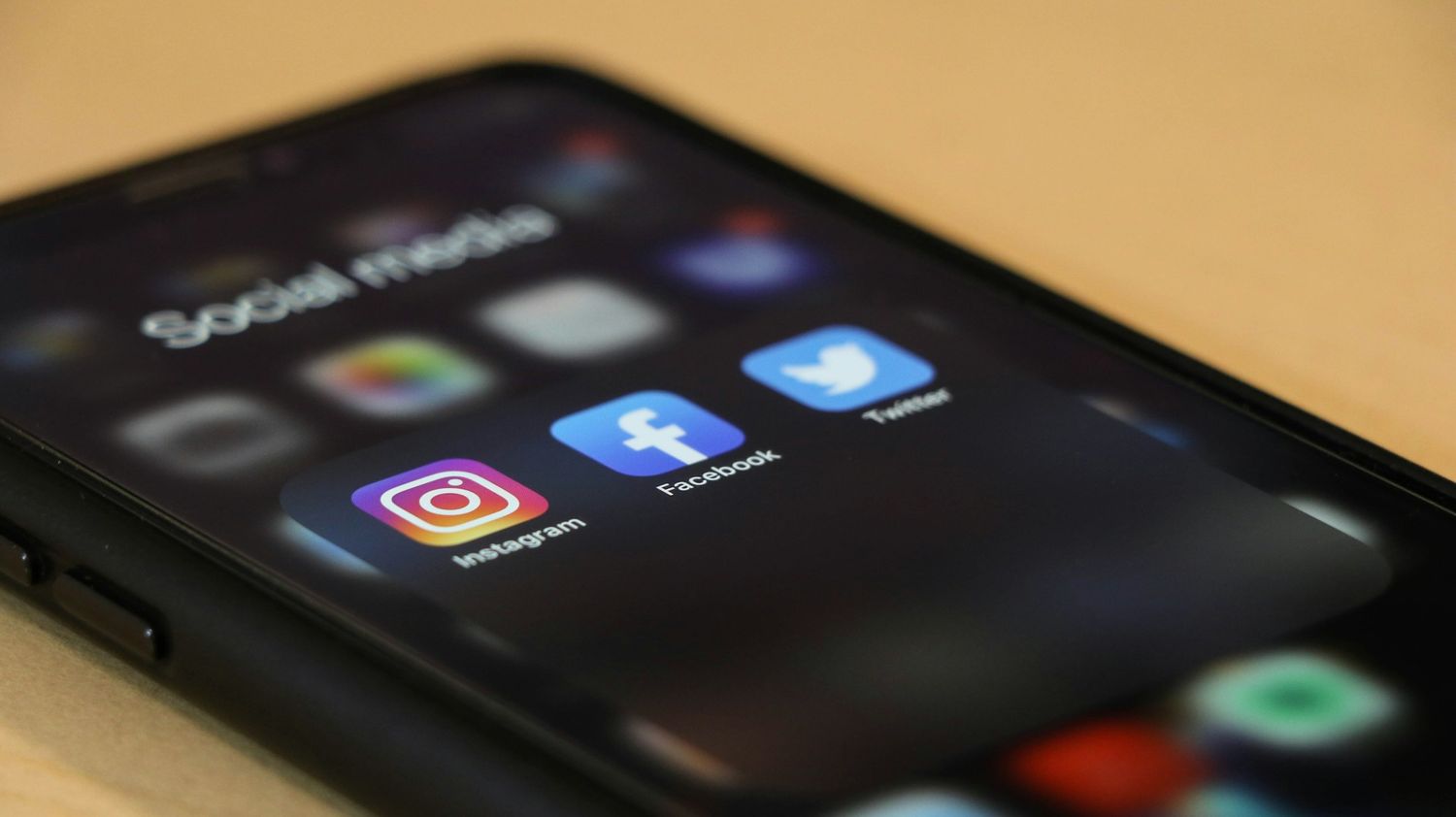
– Social media on a phone by dole777
– People looking at their phones by Camilo Jimenez
– Writing by Debby Hudson